
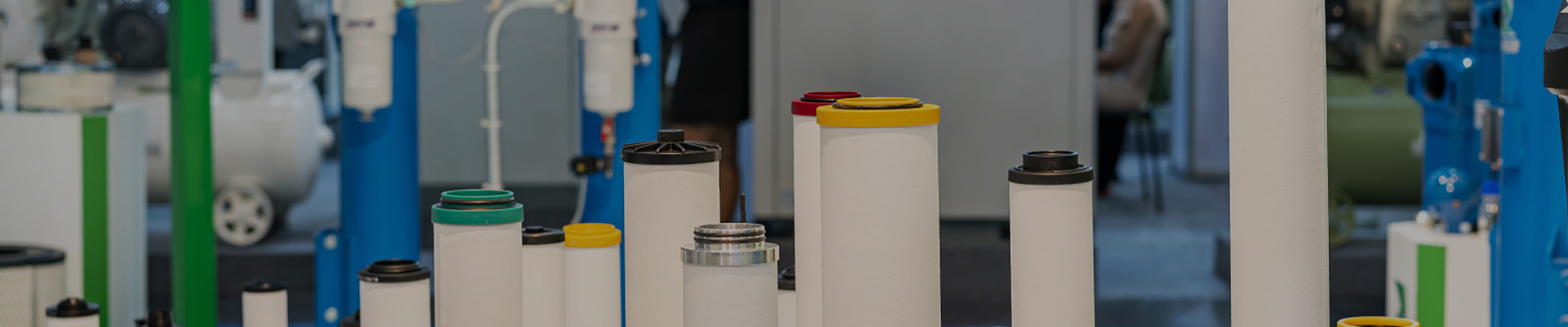
Stainless steel metal filter elements are widely used in industries that require reusable, high-temperature and corrosion-resistant filtration. Stainless steel woven mesh and sintered stainless steel fiber felt are the two most common metal filter media. Many buyers confuse these two materials and select the wrong filter for their system, leading to short service life, high pressure drop or poor filtration efficiency.
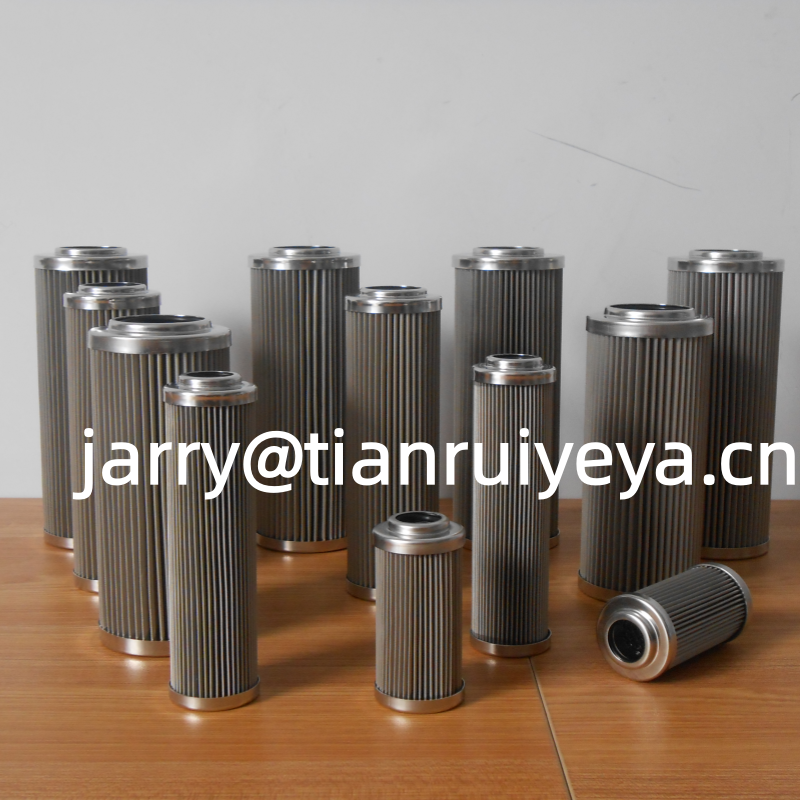
1. Stainless Steel Woven Mesh Filter
Structure & Filtration Principle:
Stainless steel woven mesh is made by interlacing stainless steel wires (304 / 316L) on weaving looms. It belongs to surface filtration. Particles larger than the mesh aperture are trapped on the surface of the screen. Multi-layer Dutch weave mesh is common for finer precision.
- Smooth mesh surface, very easy to backwash and clean; contaminants peel off easily during online flushing
- Low initial pressure drop, good flow performance
- Cost-effective, economical for coarse & medium filtration
- Stable for cyclic backflush systems, long service life with regular cleaning
- Wide micron range from 25μm up to 3000μm
- Poor performance for sub-10μm fine filtration
- Mesh wire intersections may shift and deform under high repeated pressure pulsation
- Only surface capture, low dirt holding capacity compared with sintered fiber felt
Typical Application Scenes:
Hydraulic suction filtration, pump protection, cooling water, pipeline strainers, lubricating oil pre-filtration, irrigation, raw water filtration, fuel coarse filtration, self-cleaning filter baskets.
2. Sintered Stainless Steel Fiber Felt Filter
Structure & Filtration Principle:
Sintered stainless steel fiber felt is manufactured by laying micron-grade stainless steel fibers into a non-woven mat, then vacuum sintered at high temperature. It forms a 3D gradient porous structure and works as depth filtration. Contaminants are captured inside the whole felt layer.
- High dirt holding capacity, much longer service cycle between cleanings
- Stable absolute precision, can reach 1μm ~ 20μm fine filtration
- Uniform pore distribution, resistant to high differential pressure and thermal shock
- No fiber shedding, suitable for high-purity process fluid
- Excellent resistance to high temperature and corrosive chemicals
- Higher initial pressure drop than woven mesh
- Higher raw material cost
- Backwashing requirement is stricter than woven mesh
Typical Application Scenes:
Polymer melt filtration, chemical catalyst recovery, high-temperature gas purification, paint & coating filtration, pharmaceutical liquid filtration, hydraulic fine filtration, CNG /acetylene gas filtration, edible oil refining.
3. Side-by-side Comparison Table
| Item | Stainless Steel Woven Mesh | Sintered Stainless Steel Fiber Felt |
|---|---|---|
| Filtration Type | Surface filtration | Depth gradient filtration |
| Precision Range | 25μm ~ 3000μm | 1μm ~ 100μm |
| Dirt Holding Capacity | Low | High |
| Initial Pressure Drop | Low | Medium |
| Backwash Performance | Excellent, easy cleaning | Good, needs optimized backflush parameters |
| Best For | Coarse / medium filtration, pump protection, large flow | Fine filtration, high purity, high temperature chemical fluid |
| Cost | Lower | Higher |
4. How to Choose the Right Filter Media
Choose woven mesh, if you need:
- Large flow rate, low pressure drop
- Pump suction protection, raw water, cooling fluid pre-filter
- Automatic frequent backwash system, budget-sensitive coarse filtration
Choose sintered fiber felt, if you need:
- Stable fine micron filtration (1~20μm)
- Long service interval, less frequent maintenance
- High-temperature gas, polymer, chemical, high-purity process liquid
- No fiber shedding is required
Important note: We can custom pleated filter cartridges with both woven mesh and sintered felt media, with customized end caps, O-ring seals (EPDM / HNBR / Viton), sizes and connection types according to your filter housing drawing.
If you are unsure which filter media suits your hydraulic, chemical or gas filtration system, send us 【jarry@tianruiyeya.cn】 your flow rate, working pressure, medium temperature and target micron rating. Our engineering team will provide you with a professional filter recommendation and quotation.
Post time: Nov-04-2026