

1. Introduction
The micron rating is the core technical parameter of a hydraulic filter element, which directly determines the oil contamination control effect, hydraulic system cleanliness level, and the service life of hydraulic components. Selecting a reasonable filter micron rating is the key to avoiding component wear, system failure, oil temperature overheating, and oil leakage. In industrial hydraulic systems, ISO 4406 cleanliness standard and filter beta ratio (β value) are the core basis for micron precision selection, rather than blindly pursuing higher precision or lower cost.
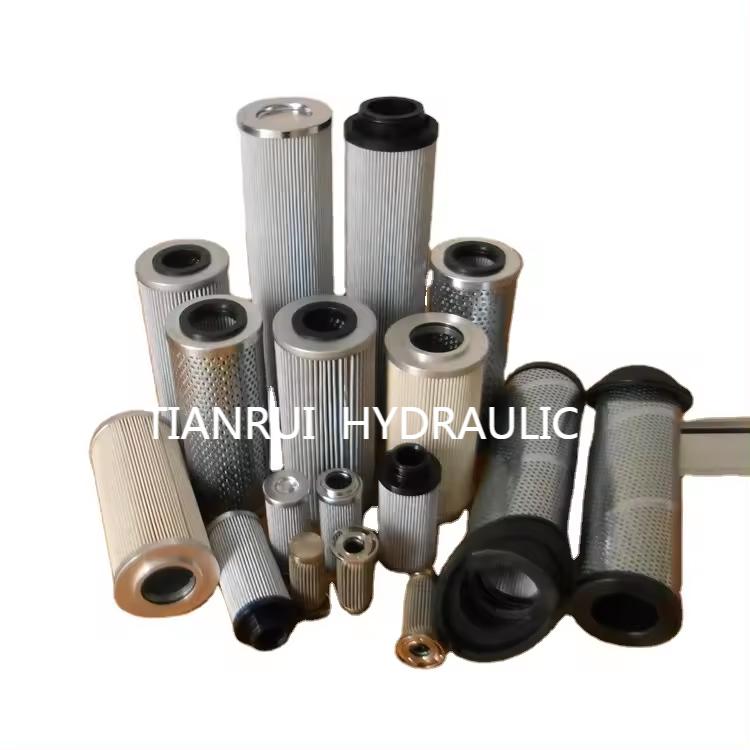
2. Core Concept: Nominal vs Absolute Micron Rating
2.1 Interception efficiency:
Absolute filtration accuracy: Extremely high efficiency, usually referring to the ability to completely block all impurity particles above a specified size.
Nominal filtration accuracy: The efficiency is proportional. Depending on different manufacturers or standards, the interception efficiency for the same micrometer value may range from 50% to 98%.
2.2 Standard Specifications:
Absolute filtration accuracy: There are more stringent tests and definitions (such as measured by specific values β or particle count standards).
Nominal filtration accuracy: There is no unified industry standard, and it is often determined by each manufacturer based on their own benchmarks.
2.3 Application Scenarios:
Absolute Filtration Accuracy: Suitable for precise industrial processes or fluid systems that are sensitive to impurities and require high cleanliness.
Nominal Filtration Accuracy: Typically used for coarse filtration or pre-treatment stages (such as capturing large sand particles and debris).
3. Micron Precision Selection by Hydraulic Circuit Position
Different installation positions of filter elements bear different filtration responsibilities, so the micron rating must be classified and selected, which is also the most practical selection method for engineering applications.
3.1 Suction Line Filter
Large micron precision, low resistance, mainly protects the hydraulic pump from large particle impact. Conventional specification: 100–150μm nominal precision, no high-precision requirement, avoiding oil suction vacuum and pump cavitation.
3.2 Pressure Line Filter
Core precision filtering link, protects precision valves, piston pumps and core components. Conventional specification: 3–10μm absolute precision, suitable for high-pressure working conditions of 210–420bar.
3.3 Return Line Filter
Overall circulation purification of system oil fluid, controls overall system cleanliness. Conventional specification: 10–25μm absolute precision, the most widely used filter type in industrial hydraulic stations.
4. Precision Matching by Hydraulic Component Type
The precision of the filter element depends on the sensitivity of the matching hydraulic components, and the mainstream industry matching standards are as follows:
5. Common Selection Mistakes & Optimization Suggestions
Blindly pursuing ultra-high precision. Excessively high micron precision will cause high differential pressure, rapid blockage, shortened service life of the filter element, and increased system operating load.
6. Conclusion
English: The correct selection of hydraulic filter micron rating needs to comprehensively consider ISO 4406 cleanliness grade, installation circuit position, matching component precision and beta ratio performance. Reasonable micron precision can effectively control hydraulic oil pollution, reduce component wear and failure rate, and extend the maintenance cycle of hydraulic equipment. For industrial, mining, engineering machinery and central Asian hydraulic supporting projects, standardized precision matching is the core of stable system operation. (contact: jarry@tianruiyeya.cn)
Post time: Sep-27-2026